




Still, you might be passing commodities further than simple muscle pressure. If you’ve ever felt a sharp click when you open your mouth or a dull pang around your jaw after a long day. Numerous people deal with jaw discomfort without realizing that it could be linked to a condition known as TMJ Disorder – a problem that affects the temporomandibular joints, the hinge- suchlike joints on both sides of your face that connect your jaw to your cranium.
These bitsy joints work hard every day. They help you bite , speak, nudnik and move your jaw in several directions. When a commodity disrupts this smooth stir – whether it’s misalignment, stress, injury or overuse you may start to feel a range of symptoms that can impact your diurnal routine.
What Exactly Is TMJ Disorder?
TMJ complaint( frequently called TMD) refers to problems affecting the jaw joint, girding muscles and the slice that cocoons the joint. Because these joints are among the most complex in your body, indeed small issues can beget conspicuous discomfort.
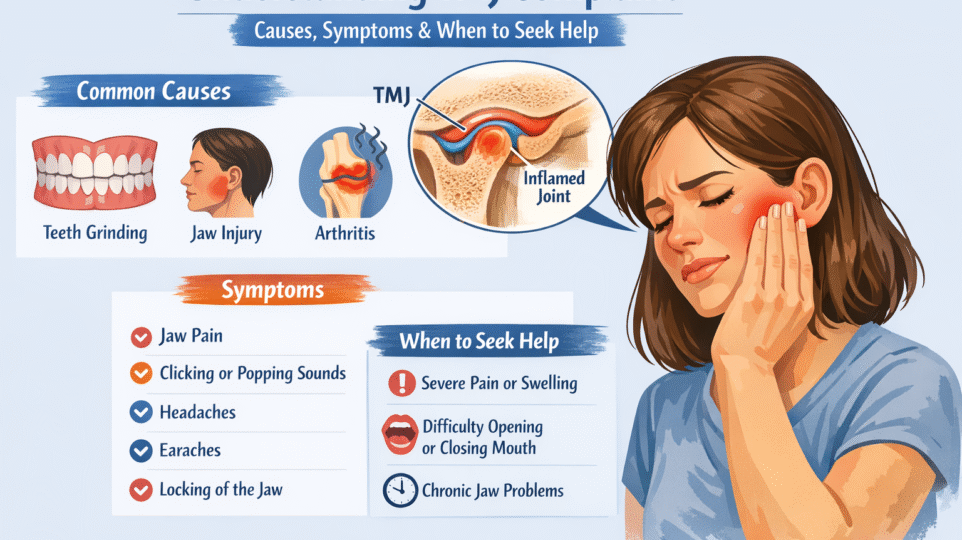
People with TMJ complaint frequently witness
- Jaw pain or tenderheartedness
- Clicking or popping sounds when opening the mouth
- Difficulty biting
- Stiffness or limited jaw movement
- Headaches or earaches
- Pain that radiates to the neck or shoulders
While these symptoms may appear mild at first, they can worsen over time if the underpinning cause is n’t addressed.
Common Causes of TMJ Disorder
TMJ issues do n’t generally have a single root cause. In numerous cases, it’s a combination of factors similar as
1. Jaw Misalignment
Still, the joint may strain to serve easily, if your bite i n’t duly aligned.
2. Teeth Grinding( Bruxism)
Grinding or clinging frequently at night puts nonstop pressure on the jaw muscles and joints.
3. Arthritis
Wear and tear in the joint can lead to inflammation and stiffness.
4. Injury or Trauma
A direct blow or accident can disturb the joint’s position or function.
5. Stress
Stress frequently leads to muscle pressure, clinging or grinding all of which contribute to TMJ problems.
How TMJ diseases Affect Daily Life
TMD doesn’t just beget pain it can disrupt simple conditioning like eating your favorite foods or speaking comfortably. Some people notice that the discomfort increases during stressful days, while others feel it first thing in the morning after a night of clinging .
Because the symptoms vary from person to person, early opinion is the stylish way to help long- term damage.
Effective Treatment Options for TMJ Disorder
The good news is that utmost TMJ diseases can be managed successfully with the right approach. Depending on the cause and inflexibility, treatment may include
- Custom night guards or slivers to reduce clinging
- Jaw exercises to strengthen and relax the muscles
- Life changes, similar as posture correction or stress reduction
- Drug for short- term inflammation and pain
- Dental treatments to correct bite alignment
- Advanced remedial options for habitual or severe cases
A substantiated plan ensures better, longer- lasting relief.
When Should You See a Dentist for TMJ Pain?
Still, if you hear clicking that’s accompanied by discomfort, or if your jaw occasionally feels wedged or your jaw pain keeps coming back. Beforehand care can help the condition from worsening and help restore normal jaw movement.
A TMJ specialist can examine your bite, joints, and muscles to understand what’s causing your symptoms and recommend a treatment plan that fits your requirements.
Final studies
TMJ complaints can be frustrating, but it’s also veritably treatable – especially when caught beforehand. With the right care, you can get back to comfortable chewing, clear speaking and pain-free diurnal living. Still, do n’t ignore it, If you’ve been dealing with jaw pain or clicking. Reaching out to a dental professional like Restore Dental Gurgaon is the first step toward changing real relief.


